Circumcision is an important concept in the Bible, especially in the Old Testament. It was a physical sign of God’s covenant with Abraham and his descendants. The practice also carries spiritual meaning throughout Scripture, particularly when the Bible speaks about the condition of the human heart.
The circumcision meaning in the Bible goes beyond a physical act. It helps explain God’s covenant, obedience, faith, and the difference between outward religious actions and inward spiritual change. In the New Testament, the idea develops further as Scripture emphasizes faith and a heart transformed by God.
Quick Answer: What Does Circumcision Mean in the Bible?
In the Bible, circumcision is the removal of the foreskin of the male sexual organ. God established it as a sign of His covenant with Abraham and his descendants in Genesis 17:9–14.
Spiritually, circumcision can also represent a heart that turns away from sin and becomes devoted to God. The New Testament emphasizes inward transformation rather than relying only on an outward sign.
What Is the Biblical Meaning of Circumcision?
The biblical meaning of circumcision includes covenant, identity, obedience, and spiritual dedication. In the Old Testament, God commanded Abraham and the males in his household to be circumcised as a sign of the covenant between them.
Genesis 17:11 explains that circumcision would serve as a sign of the covenant between God and Abraham’s descendants.
This physical sign identified the people who belonged to the covenant community. It reminded them of their relationship with God and their responsibility to follow His commands.
However, circumcision was not simply about an outward action. Other passages teach that God also wanted His people to love Him sincerely and obey Him from the heart.
Why Did God Establish Circumcision?
God established circumcision as part of His covenant with Abraham in Genesis 17.
In this covenant, God promised to make Abraham the father of many nations and to establish a special relationship with his descendants. Circumcision became the physical sign of that covenant.
Its main purposes included:
- Covenant: It marked the covenant God made with Abraham and his descendants.
- Identity: It distinguished the covenant community from surrounding peoples.
- Obedience: It was a command Abraham was expected to follow.
- Remembrance: It served as a lasting sign of the covenant relationship.
Circumcision was therefore connected to the history of Israel and its relationship with God. It should be understood within that biblical and historical setting.
Circumcision and God’s Covenant With Abraham
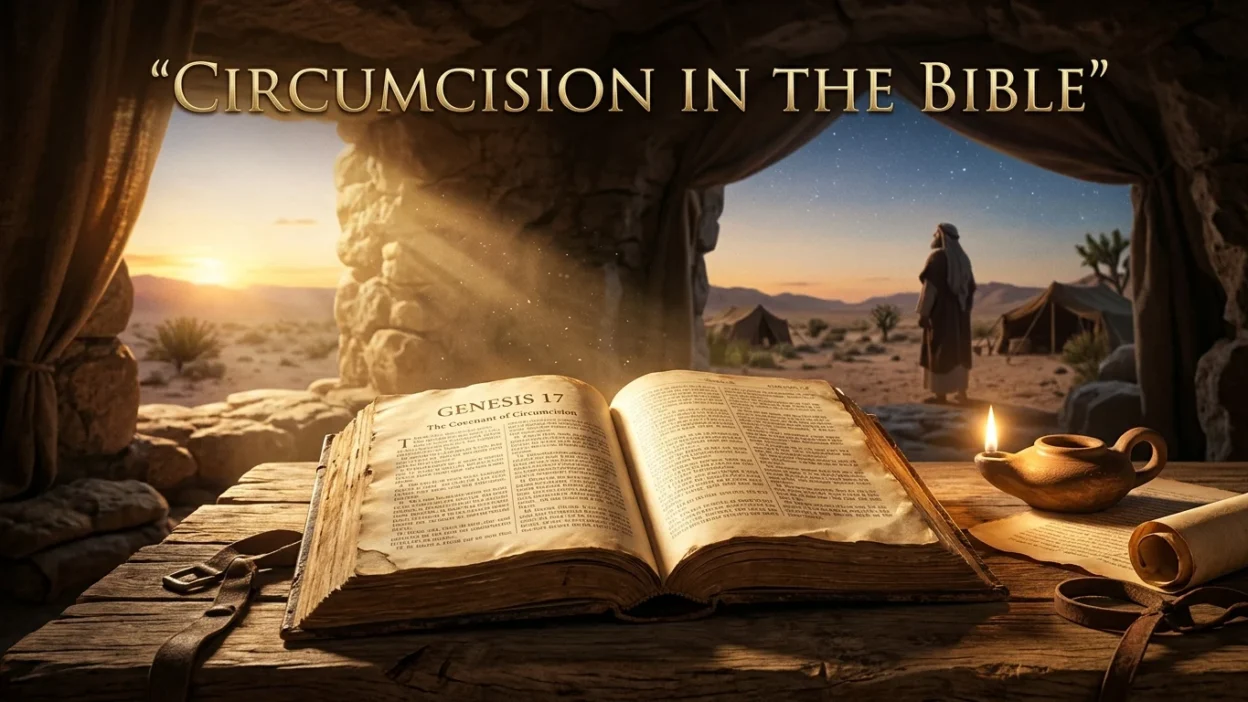
Genesis 17 is the central passage explaining circumcision in the Bible.
God changed Abram’s name to Abraham and promised that he would become the father of many nations. God also promised the land of Canaan to Abraham’s descendants.
As part of this covenant, God commanded Abraham to circumcise the males in his household. Abraham obeyed, and the practice became an important sign of Israel’s covenant identity.
| Biblical passage | Meaning |
|---|---|
| Genesis 17:9–14 | Circumcision is established as a covenant sign. |
| Genesis 17:23–27 | Abraham obeys God’s command. |
| Leviticus 12:3 | The Law specifies circumcision on the eighth day. |
| Joshua 5:2–9 | Circumcision is addressed as Israel prepares to enter the Promised Land. |
These passages show that circumcision had a specific role in God’s covenant with Abraham and the people of Israel.
What Does Circumcision of the Heart Mean?
One of the most important spiritual ideas connected with circumcision is circumcision of the heart.
This phrase does not refer to a physical procedure. It describes an inward change in which a person turns away from stubbornness, sin, and disobedience and becomes devoted to God.
Deuteronomy 10:16 calls the Israelites to circumcise their hearts and stop being stubborn. Deuteronomy 30:6 connects this inward change with loving God wholeheartedly.
The message is clear: God wants more than outward religious behavior. He desires sincere love, humility, and obedience.
Circumcision of the heart can be understood through these spiritual principles:
- Turning away from sinful behavior.
- Loving God sincerely.
- Listening to God’s Word.
- Developing humility and a willing spirit.
- Living out faith through actions.
This teaching reminds believers that genuine faith involves the heart, not just outward appearances.
Circumcision in the Old Testament
In the Old Testament, circumcision was an important part of Israel’s covenant life. It was required for male members of the covenant community and was also relevant to male foreigners who joined the community under the conditions described in the Law.
The practice appears in several important biblical events, including God’s covenant with Abraham and Israel’s preparation to enter the Promised Land.
The Old Testament also makes clear that physical circumcision alone was not enough to demonstrate faithfulness. The prophets repeatedly called the people to return to God with sincere hearts.
For example, Jeremiah 4:4 calls the people to circumcise their hearts. This language emphasizes repentance and a genuine change in how people live.
What Does Circumcision Mean in the New Testament?
The New Testament discusses circumcision while explaining how people enter a right relationship with God through faith in Jesus Christ.
The early Christian community included both Jewish and Gentile believers. This raised an important question: Did Gentile Christians need to receive physical circumcision and follow the entire Mosaic Law to belong to God’s people?
In Acts 15, the apostles and elders considered this question. Their decision rejected the demand that Gentile believers must be circumcised as a requirement for salvation.
Paul also explains that outward circumcision does not make a person righteous before God. Faith, grace, and inward transformation are central to the Christian message.
Key New Testament Passages
| Scripture | Main teaching |
|---|---|
| Acts 15:1–29 | The early Church discusses circumcision and Gentile believers. |
| Romans 2:28–29 | Paul emphasizes inward circumcision of the heart. |
| Galatians 5:6 | Faith working through love is what matters. |
| Colossians 2:11–12 | Paul connects spiritual transformation with Christ. |
| 1 Corinthians 7:19 | Physical circumcision is not the central issue; keeping God’s commands matters. |
These passages show that the New Testament shifts the focus away from circumcision as a requirement for Gentile Christians and toward faith expressed through love and obedience.
Is Circumcision Required for Christians Today?
Most Christian traditions teach that physical circumcision is not required for salvation or for belonging to the Church.
This understanding is based on passages such as Acts 15, Romans 2:28–29, and Galatians 5:6. Christians believe that salvation comes through God’s grace and is received through faith in Jesus Christ, not through a physical ritual.
However, Christian communities may differ in how they discuss circumcision as a cultural, family, or medical practice. The biblical question of whether it is required as a religious condition is different from the question of whether someone chooses it for other reasons.
The key New Testament teaching is that physical circumcision does not determine a person’s standing before God.
Physical Circumcision vs. Spiritual Circumcision
The Bible uses circumcision in both a literal and a spiritual sense. Understanding the difference helps readers interpret the relevant passages correctly.
| Physical circumcision | Spiritual circumcision |
|---|---|
| An outward physical sign | An inward spiritual picture |
| Established as a covenant sign with Abraham | Describes a heart devoted to God |
| Connected with Israel’s covenant identity | Emphasizes sincere faith and repentance |
| Involves a physical procedure | Involves inward transformation |
| Discussed in Genesis 17 | Discussed in Deuteronomy 10:16 and Romans 2:29 |
The two ideas are related in biblical teaching, but they are not identical. Spiritual circumcision is a metaphor for inward change, not a physical procedure.
What Is the Spiritual Significance of Circumcision?
The spiritual significance of circumcision includes commitment, obedience, and a heart that seeks God.
First, it reminds readers that a relationship with God involves responding to His instructions. Abraham’s obedience demonstrates his trust in God’s covenant promise.
Second, the Bible’s teaching about the heart warns against relying only on outward religious practices. A person may appear religious while remaining unwilling to change inwardly.
Third, the New Testament emphasizes that faith should be active and sincere. Galatians 5:6 describes the importance of faith working through love.
For Christians, the wider lesson is that God desires a genuine relationship with people. Outward actions can express faith, but they cannot replace sincere devotion and a transformed heart.
Circumcision and Salvation
Circumcision played a specific role in the covenant God made with Abraham, but the New Testament explains that physical circumcision is not a requirement for salvation for Gentile Christians.
Romans 4 discusses Abraham’s faith and explains that he was counted righteous by faith. Paul uses Abraham’s story to show that righteousness was connected with faith, not merely with the outward sign of circumcision.
Similarly, Galatians 5:6 emphasizes faith expressed through love rather than circumcision as the basis of a person’s relationship with God.
This does not mean that obedience is unimportant. Instead, the New Testament teaches that obedience should flow from faith and a changed heart, rather than being treated as a way to earn salvation.
Common Misunderstandings About Circumcision in the Bible
Several misunderstandings can arise when readers study this topic.
Misunderstanding 1: Circumcision alone made someone righteous.
The Bible does not teach that the physical sign automatically made a person righteous. The heart, faith, and obedience also mattered.
Misunderstanding 2: Every Christian must be physically circumcised.
Acts 15 and Paul’s letters explain that Gentile believers do not need physical circumcision as a condition of salvation.
Misunderstanding 3: Circumcision of the heart is a physical act.
This expression is spiritual imagery for inward repentance, devotion, and a willingness to follow God.
Misunderstanding 4: The Old Testament practice had no spiritual meaning.
Circumcision was a literal covenant sign, but Scripture also uses its language to teach lessons about the heart and faithfulness.
Reading each passage in context helps avoid confusing the covenant sign with the broader spiritual lessons.
What Can Christians Learn From Circumcision Today?
Christians can learn several important lessons from the Bible’s teaching about circumcision.
- God values the heart: Sincere devotion matters more than appearances.
- Faith leads to obedience: Abraham’s response shows the importance of trusting God’s promises.
- Religious actions are not a substitute for faith: Outward practices cannot replace a genuine relationship with God.
- Spiritual growth requires change: Believers are called to turn away from sin and grow in love.
- Faith should be lived out: Galatians 5:6 connects faith with love in action.
These principles help readers understand why circumcision remains an important topic in biblical studies, even though Christians generally do not treat physical circumcision as a requirement for salvation.
Frequently Asked Questions
1. What does circumcision mean in the Bible?
It is a physical sign of God’s covenant with Abraham and his descendants. Scripture also uses circumcision as an image of inward devotion to God.
2. Why did God command Abraham to be circumcised?
Genesis 17 describes circumcision as a sign of the covenant God made with Abraham and his descendants.
3. What does circumcision of the heart mean?
It means turning away from stubbornness and sin and choosing sincere love, faith, and obedience toward God.
4. Is circumcision required for Christians?
Physical circumcision is not required for salvation or membership in the Christian community, according to the New Testament teaching in Acts 15 and Paul’s letters.
5. Where is circumcision first mentioned in the Bible?
Genesis 17 is the central passage where God establishes circumcision as a sign of His covenant with Abraham.
6. What does Romans 2:29 mean by circumcision of the heart?
Paul emphasizes inward devotion to God rather than relying only on outward religious identity or physical circumcision.
7. What is the main spiritual lesson of circumcision?
The central lesson is that God desires genuine faith and a heart that seeks Him, not merely outward religious actions.
Final Thoughts
The circumcision meaning in the Bible begins with God’s covenant with Abraham and develops into a broader lesson about faith and the human heart. In the Old Testament, physical circumcision served as a sign of the covenant between God and Abraham’s descendants. It marked an important part of Israel’s identity and history.
In the New Testament, the focus moves toward inward transformation, faith in Jesus Christ, and a life shaped by love. The phrase circumcision of the heart reminds believers that God desires sincere devotion rather than outward appearances alone. For Christians today, the central lesson is to seek God with a willing heart, grow in faith, and express that faith through love and obedience.

Ethan Carter is a professional content writer and researcher from the United States. He enjoys creating easy-to-understand articles that help readers find clear and accurate information. His writing focuses on careful research, simple language, and practical insights. Ethan has experience covering topics such as faith, symbolism, lifestyle, and general knowledge. He believes that good content should educate, inspire, and be accessible to everyone. His attention to detail ensures every article is informative and engaging. When he is not writing, Ethan enjoys reading, hiking, and exploring new ideas. His goal is to publish content that readers can trust and enjoy.