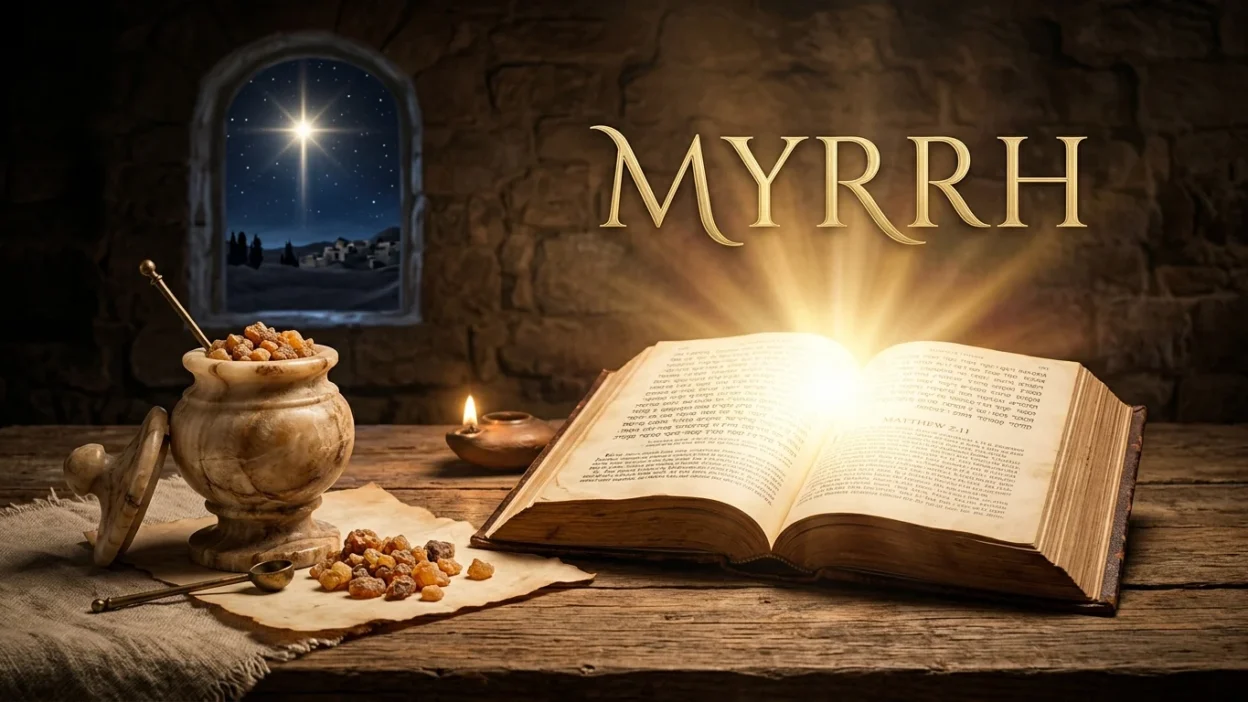
Many people search for the myrrh meaning in the Bible because myrrh is one of the most meaningful substances mentioned throughout Scripture. It appears in both the Old and New Testaments and is closely connected with worship, anointing, sacrifice, and the life of Jesus Christ. From sacred anointing oil to the gifts presented by the wise men, myrrh carries deep spiritual symbolism.
The myrrh meaning in the Bible goes beyond its use as a fragrant resin. It points to God’s holiness, Christ’s suffering, and the hope of redemption. Understanding its biblical significance helps believers appreciate how ordinary objects can reveal extraordinary spiritual truths.
Quick Answer
In the Bible, myrrh is a valuable aromatic resin used for anointing, worship, perfume, and burial preparations. Spiritually, it symbolizes sacrifice, purification, suffering, devotion, and the redemptive work of Jesus Christ.
What Does Myrrh Mean in the Bible?
Myrrh is a fragrant resin obtained from small thorny trees found in parts of Arabia and northeastern Africa. In biblical times, it was highly valued because of its pleasant fragrance and many practical uses.
In Scripture, myrrh represents:
- Worship.
- Holiness.
- Sacrifice.
- Purification.
- Honor.
- Devotion.
Its value made it a fitting offering for kings and sacred ceremonies.
| Feature | Details |
|---|---|
| Word | Myrrh |
| Biblical Meaning | Fragrant resin symbolizing sacrifice and worship |
| Source | Resin from the Commiphora tree |
| First Major Use | Sacred anointing oil |
| Main Theme | Worship, sacrifice, and redemption |
Origin and Biblical Background
Myrrh was one of the most valuable spices in the ancient world. It was traded across the Middle East and used for religious ceremonies, perfumes, medicine, and burial customs.
God instructed Moses to include myrrh in the sacred anointing oil used to consecrate the tabernacle and the priests. This made myrrh an important symbol of holiness and dedication to God’s service.
Myrrh in the Old Testament
The Old Testament mentions myrrh in several important contexts.
It was used for:
- Sacred anointing oil.
- Worship in the tabernacle.
- Fragrant perfumes.
- Royal ceremonies.
- Expressions of beauty and honor.
These uses emphasize purity, holiness, and devotion to God.
Myrrh in the New Testament
Myrrh plays a significant role in the life of Jesus Christ.
Important events include:
- The wise men presenting myrrh as a gift to the infant Jesus.
- Myrrh being offered during Jesus’ crucifixion.
- Myrrh used in preparing Jesus’ body for burial.
These events connect myrrh with Christ’s kingship, sacrifice, death, and resurrection.
Myrrh Meaning in the Bible
When people search for the myrrh meaning in the Bible, they often want to understand its symbolic importance.
Biblically, myrrh represents:
- Worship.
- Holiness.
- Sacrifice.
- Purification.
- Love.
- Suffering.
- Redemption.
Its repeated appearance throughout Scripture points believers to God’s plan of salvation.
Spiritual Meaning of Myrrh
The spiritual meaning of myrrh is rich and powerful.
It symbolizes:
- Complete devotion to God.
- Spiritual cleansing.
- Willing sacrifice.
- Endurance through suffering.
- Hope beyond death.
- Christ’s redeeming love.
For Christians, myrrh reminds them that Jesus willingly gave His life so that humanity could receive eternal life.
Why Is Myrrh Important in the Bible?
Myrrh is important because it connects several major biblical themes.
It reminds believers of:
- God’s holiness.
- Worship.
- Jesus’ birth.
- Christ’s sacrificial death.
- God’s plan of redemption.
Few biblical symbols appear at both the beginning and the end of Jesus’ earthly life as clearly as myrrh.
Why Do People Search “Myrrh Meaning in the Bible”?
People commonly search this topic because they want to:
- Understand the gifts of the wise men.
- Learn biblical symbolism.
- Study Old Testament worship.
- Discover the spiritual meaning of myrrh.
- Prepare Bible studies or sermons.
- Grow in their understanding of Jesus’ life.
Its connection to Christmas and Easter makes it one of the Bible’s most recognizable symbols.
Myrrh vs Frankincense
| Myrrh | Frankincense |
|---|---|
| Symbolizes sacrifice, suffering, and purification | Symbolizes worship, prayer, and God’s presence |
| Used in anointing and burial | Used primarily as incense in worship |
| One of the gifts given to Jesus | Also presented by the wise men |
| Points to Christ’s sacrificial mission | Highlights Christ’s divine nature |
Together, these precious gifts reveal different aspects of Jesus’ identity and mission.
Common Misconceptions About Myrrh
Several misunderstandings exist.
Myth: Myrrh was only a perfume.
Truth: It was used in worship, anointing, medicine, burial preparations, and royal ceremonies.
Myth: The wise men chose myrrh randomly.
Truth: The gift carried deep symbolic meaning, pointing toward Jesus’ future sacrifice and redemptive mission.
Myth: Myrrh has no spiritual meaning today.
Truth: Christians continue to see myrrh as a reminder of Christ’s love, sacrifice, and victory over death.
Lessons Christians Can Learn from Myrrh
The symbolism of myrrh teaches believers to:
- Worship God wholeheartedly.
- Trust His plan.
- Accept His calling.
- Remain faithful during suffering.
- Live sacrificially.
- Remember Christ’s redeeming love.
These lessons encourage believers to grow in faith and gratitude.
Final Thought
The myrrh meaning in the Bible reveals far more than the value of an ancient spice. Throughout Scripture, myrrh points to holiness, worship, sacrifice, and God’s redemptive plan through Jesus Christ. From the sacred anointing oil in the Old Testament to the gifts of the wise men and the preparation of Jesus’ body after His crucifixion, myrrh serves as a powerful reminder of God’s love and the price paid for humanity’s salvation. Understanding its biblical meaning encourages Christians to worship faithfully, trust God’s purposes, and live with gratitude for Christ’s sacrifice and the hope of eternal life.
FAQs
What does myrrh mean in the Bible?
Myrrh is a fragrant resin that symbolizes worship, sacrifice, purification, and redemption.
Why did the wise men give Jesus myrrh?
Myrrh symbolized Jesus’ future suffering, sacrificial death, and His mission to redeem humanity.
What was myrrh used for in biblical times?
It was used in anointing oil, perfumes, worship, medicine, and burial preparations.
What is the spiritual meaning of myrrh?
It represents devotion, holiness, sacrifice, endurance, and Christ’s redeeming love.
Is myrrh mentioned in both the Old and New Testaments?
Yes. It appears throughout Scripture in connection with worship, anointing, and the life of Jesus.
What is the difference between myrrh and frankincense?
Myrrh symbolizes sacrifice and suffering, while frankincense represents worship, prayer, and God’s presence.
Why is myrrh important to Christians today?
It reminds believers of Jesus’ sacrificial love, God’s redemption, and the hope found through His resurrection.

Nathan Collins is a dedicated American author and content researcher with years of experience in digital publishing. He is passionate about writing clear, accurate, and engaging articles for a wide audience. His areas of interest include faith, history, culture, symbolism, and educational content. Nathan values honest research and strives to present information in a simple and balanced way. He believes that quality writing can inform, encourage, and inspire readers every day. His approachable style makes even detailed topics easy to understand. In his free time, Nathan enjoys reading historical books, outdoor activities, and lifelong learning. He is committed to creating reliable content that helps readers make informed decisions.