
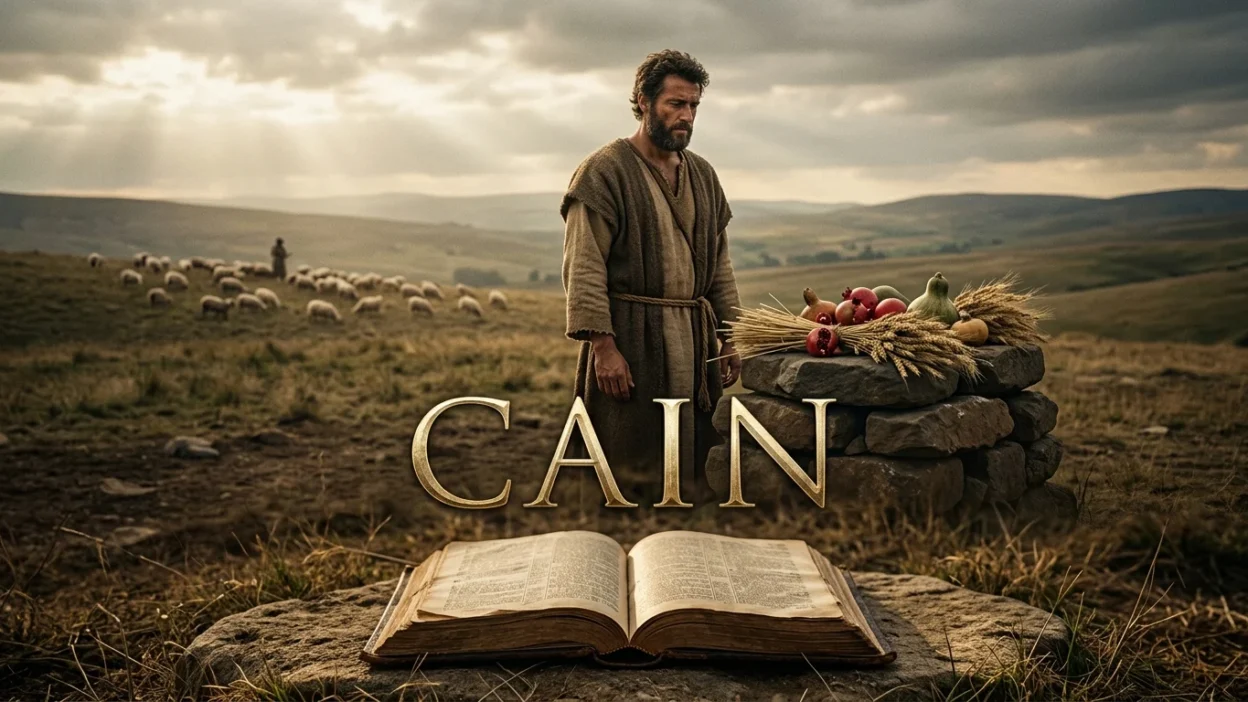
The Cain meaning in the Bible is closely connected with the story of Adam and Eve’s first son, who became known for his conflict with his younger brother Abel. Cain is one of the earliest people mentioned in Genesis, and his story teaches important lessons about jealousy, anger, personal responsibility, and the consequences of sin.
The name Cain is commonly associated with “acquired” or “gotten.” This meaning comes from the words of Eve in Genesis 4:1, where she says she has acquired a man with the help of the Lord. Cain’s story also reminds readers that God warns people about sin and calls them to take responsibility for their choices.
Quick Answer: What Does Cain Mean in the Bible?
Cain is commonly understood to mean “acquired” or “gotten.” He was the first son of Adam and Eve, according to Genesis. His biblical story centers on his relationship with Abel, the danger of jealousy and anger, and God’s response to human wrongdoing.
Is Cain a Biblical Name?
Yes, Cain is a biblical name that appears in Genesis 4.
Cain was the first son of Adam and Eve. His younger brother was Abel. Cain worked the soil, while Abel became a keeper of sheep.
Their story is one of the earliest accounts in the Bible describing conflict between siblings. It explores the importance of the heart behind a person’s actions and the responsibility people have for their decisions.
What Is the Origin of the Name Cain?
The name Cain comes from the Hebrew name Qayin (קַיִן).
In Genesis 4:1, Eve says that she has “gotten” or “acquired” a man with the help of the Lord. This statement is traditionally connected with the meaning of Cain’s name.
| Name Detail | Meaning |
|---|---|
| Name | Cain |
| Hebrew form | Qayin |
| Language | Hebrew |
| Commonly associated meaning | Acquired or gotten |
| Biblical parents | Adam and Eve |
| Brother | Abel |
| First appearance | Genesis 4:1 |
The Story of Cain and Abel
The story of Cain and Abel appears in Genesis 4:1–16.
Cain brought an offering from the fruit of the ground, while Abel brought an offering from the firstborn of his flock and their fat portions. God regarded Abel and his offering, but not Cain and his offering.
Cain became angry and discouraged. God warned him that sin was waiting at the door and that he needed to master it.
Cain later took Abel into the field and killed him. When God questioned Cain about his brother, Cain responded by asking, “Am I my brother’s keeper?”
The story shows how unchecked anger and jealousy can lead to terrible choices.
What Does Cain Symbolize Spiritually?
Cain is often discussed as a warning about the dangers of allowing sinful attitudes to grow.
His story highlights several spiritual lessons:
- Jealousy: Resentment can grow when people compare themselves with others.
- Anger: Anger needs to be handled wisely rather than allowed to control behavior.
- Responsibility: People must take responsibility for their choices.
- Obedience: God calls people to listen to His warnings.
- Consequences: Wrongdoing affects both individuals and their communities.
These lessons come from Cain’s biblical story, not from the name’s literal meaning.
Why Did God Reject Cain’s Offering?
Genesis 4 says that God regarded Abel and his offering but did not regard Cain and his offering. The passage does not explain every detail of God’s decision.
Some readers emphasize the difference between the offerings, while others focus on the attitude and faith behind them. Hebrews 11:4 later says that Abel offered his sacrifice by faith.
The important point is that the story encourages readers to consider both their actions and the condition of their hearts.
What Does Cain Teach Us About Jealousy?
Cain’s response to Abel is an important biblical warning about jealousy.
Rather than dealing with his anger, Cain allowed it to shape his behavior. God warned him before the tragedy occurred, showing that Cain had an opportunity to respond differently.
The lesson is clear: negative emotions should be faced honestly and handled wisely before they lead to harmful choices.
Cain and the Consequences of Sin
After Abel’s death, God confronted Cain about what he had done. Cain was judged for his actions and faced consequences that affected his life.
Yet the story also includes an important detail about God’s response: God placed a mark or sign on Cain so that others would not kill him (Genesis 4:15).
This passage shows that the story includes both judgment and protection. It should not be reduced to a simple claim that Cain was beyond God’s concern.
Is Cain a Bad Name?
Cain’s biblical story is associated with wrongdoing, but the name itself does not determine a person’s character or destiny.
Names can have historical meanings and cultural associations, but a person named Cain is not automatically jealous, sinful, or unfaithful.
Parents considering the name may want to understand its strong biblical associations before choosing it.
Cain in the New Testament
Cain is also mentioned in the New Testament.
- Hebrews 11:4 contrasts Abel’s faith with the account of his death.
- 1 John 3:12 warns readers not to follow Cain’s example of evil actions.
- Jude 1:11 refers to “the way of Cain” as a negative example.
These passages use Cain’s story to warn against wrongdoing and encourage a life shaped by faith and righteousness.
Cain vs. Abel: Biblical Comparison
| Feature | Cain | Abel |
|---|---|---|
| Parents | Adam and Eve | Adam and Eve |
| Occupation | Worked the ground | Kept sheep |
| Offering | Fruit of the ground | Firstborn of his flock |
| Main biblical association | Jealousy and wrongdoing | Faith and righteousness |
| Key passage | Genesis 4:1–16 | Genesis 4:1–10 |
Final Thoughts
The Cain meaning in the Bible is commonly understood as “acquired” or “gotten,” based on Eve’s words in Genesis 4:1. Cain was the first son of Adam and Eve, and his story became a lasting biblical lesson about jealousy, anger, responsibility, and the consequences of sin.
Although Cain is remembered for his wrongdoing, the deeper lesson of his story is about the choices people make when facing difficult emotions. His account encourages readers to listen to wise warnings, take responsibility for their actions, and choose what is right rather than allowing anger or jealousy to control them.
FAQs
What does Cain mean in the Bible? Cain is commonly understood to mean “acquired” or “gotten,” based on Genesis 4:1.
Who was Cain in the Bible? Cain was the first son of Adam and Eve and the older brother of Abel.
Why did Cain kill Abel? Genesis describes Cain becoming angry after God did not regard his offering. Cain later killed Abel, and the story warns about jealousy and unchecked anger.
Was Cain the first child in the Bible? Cain is presented as the first son of Adam and Eve in Genesis 4.
Is Cain mentioned in the New Testament? Yes. Cain is mentioned in Hebrews 11:4, 1 John 3:12, and Jude 1:11.
Is Cain a good Christian name? Cain is a biblical name, but its story carries serious negative associations. Families may wish to consider those associations when choosing it.