
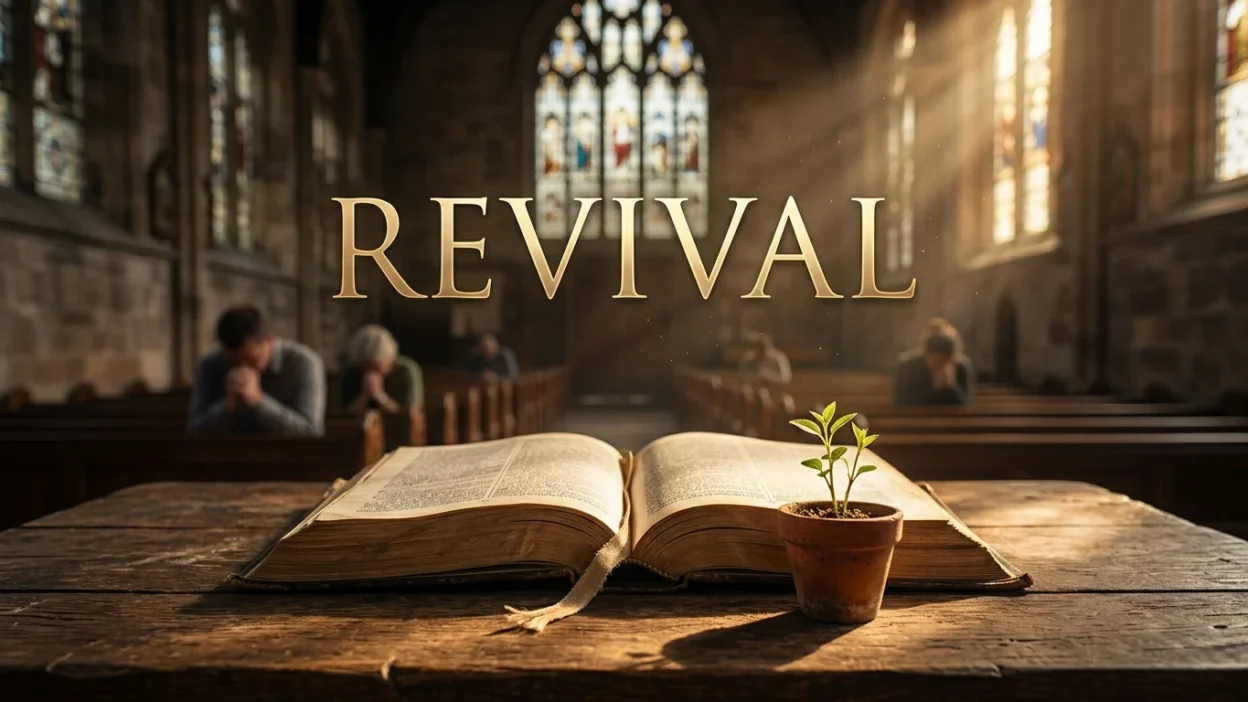
The revival meaning in the Bible refers to spiritual renewal, a return to God, and the awakening of faith in people’s hearts. Revival happens when people turn back to God, renew their commitment to Him, and seek to live according to His Word.
Throughout Scripture, God’s people sometimes became spiritually weak, turned away from His commands, or forgot their need for Him. In these moments, they needed renewal. The Bible shows that God can restore His people, strengthen their faith, and bring them back to a life of worship and obedience.
Quick Answer: What Does Revival Mean in the Bible?
Revival means spiritual renewal, renewed faith, and a return to God. It involves turning away from sin, seeking God’s presence, and allowing His truth to reshape the heart and life. Although the word revival is not used with exactly the same meaning in every Bible translation, the theme appears throughout Scripture.
What Does Revival Mean?
The word revival generally means bringing something back to life or restoring it after a period of weakness or decline.
In a biblical context, revival describes a renewed spiritual life. It can refer to an individual becoming serious about their faith again or a community returning to worship, prayer, repentance, and obedience to God.
Revival is not simply an emotional experience or a large religious gathering. Its deeper purpose is a lasting change in the heart that leads people closer to God.
Is Revival Mentioned in the Bible?
Yes, the Bible contains the language and theme of revival, although the exact wording depends on the translation.
Psalm 85:6 asks God, “Wilt thou not revive us again: that thy people may rejoice in thee?” (KJV).
This verse expresses a desire for God to restore His people spiritually so they can rejoice in Him again.
The Hebrew word often translated as revive carries ideas of living, restoring life, and being renewed. This helps explain why revival is strongly connected with spiritual restoration.
Revival in Psalm 85:6
Psalm 85:6 is one of the best-known verses associated with biblical revival.
The psalmist asks God to revive His people so they can experience renewed joy in Him. The verse suggests that spiritual renewal is not merely about improving outward behavior. It is about restoring a living relationship with God.
This passage teaches Christians to pray for renewed faith, a willing heart, and a deeper desire to follow God’s ways.
What Is the Spiritual Meaning of Revival?
Spiritually, revival represents a renewed desire to know God, follow His Word, and live according to His will.
It may involve recognizing areas of spiritual weakness, confessing sin, rebuilding a habit of prayer, or returning to Scripture after a period of neglect.
Biblical revival is closely associated with:
- Repentance: Turning away from sin and toward God.
- Renewed faith: Trusting God more deeply.
- Prayer: Seeking God’s guidance and presence.
- Obedience: Putting God’s teaching into practice.
- Worship: Honoring God with a sincere heart.
- Restoration: Returning to a faithful relationship with God.
These themes show that revival involves both an inward change and an outward response.
Revival and Repentance
Repentance is an important part of spiritual revival.
In 2 Chronicles 7:14, God speaks about His people humbling themselves, praying, seeking His face, and turning from their wicked ways. The passage connects these responses with God’s promise to hear and restore.
Although the verse was originally addressed to Israel in its historical setting, Christians often reflect on its broader call to humility, prayer, and repentance.
Revival is not simply asking God to change circumstances. It also involves being willing to let Him change our attitudes, priorities, and actions.
Revival and the Holy Spirit
The Holy Spirit plays an important role in Christian understanding of spiritual renewal.
In Titus 3:5, Paul speaks of the “renewing of the Holy Ghost” (KJV). This passage concerns God’s saving mercy and the Spirit’s renewing work.
Revival is often associated with the Holy Spirit awakening believers to a deeper love for God, greater concern for others, and a stronger desire to live faithfully.
However, genuine spiritual renewal should not be measured only by strong feelings. Its lasting fruit can include love, patience, kindness, faithfulness, and self-control, as described in Galatians 5:22–23.
Biblical Examples of Revival
The Bible contains several accounts of God’s people returning to Him and renewing their commitment to His commands.
| Biblical Example | Reference | Main Lesson |
|---|---|---|
| King Josiah’s reforms | 2 Kings 22–23 | Returning to God’s Word |
| Ezra and the people | Nehemiah 8 | Hearing and understanding Scripture |
| The people confessing their sins | Nehemiah 9 | Repentance and renewed commitment |
| Pentecost | Acts 2 | The Holy Spirit empowering the early church |
| The prayer for renewal | Psalm 85:6 | Asking God to revive His people |
These examples show different aspects of spiritual renewal, from renewed attention to Scripture to repentance and the growth of the early church.
Revival in the Old Testament
In the Old Testament, God’s people repeatedly faced times of spiritual decline and restoration.
During the reign of King Josiah, the Book of the Law was found, and the king responded by seeking to bring the nation back to God’s commands (2 Kings 22–23).
Similarly, Nehemiah 8 describes the people gathering to hear God’s Law explained. Their response included understanding, worship, and renewed attention to their covenant responsibilities.
These accounts show that spiritual renewal is closely connected with hearing God’s Word and responding to it sincerely.
Revival in the New Testament
In the New Testament, spiritual renewal is connected with repentance, faith in Jesus Christ, and the work of the Holy Spirit.
Acts 2 describes Pentecost, when the Holy Spirit came upon Jesus’ followers and Peter preached to the gathered crowd. Many people responded to his message and were baptized.
Pentecost is often viewed as a major moment in the growth of the early church. It demonstrates how the Holy Spirit empowered believers to proclaim the gospel and form a community devoted to teaching, fellowship, prayer, and worship.
What Are the Signs of Biblical Revival?
The Bible does not give one universal checklist for identifying revival. However, several themes appear in accounts of spiritual renewal.
A renewed desire for God’s Word: People listen to Scripture and seek to understand it.
Genuine repentance: People acknowledge wrongdoing and seek to change.
Sincere prayer: People turn to God for guidance and help.
Greater love for others: Faith produces compassion, forgiveness, and service.
Changed behavior: People increasingly seek to live according to God’s teachings.
Lasting spiritual fruit: Renewal affects everyday life rather than remaining limited to a single emotional moment.
What Is the Difference Between Revival and Awakening?
The terms revival and spiritual awakening are often used in similar ways, but they can have slightly different emphases.
| Term | Common Christian Meaning |
|---|---|
| Revival | Renewed spiritual life among believers or a church |
| Spiritual awakening | A broader renewed awareness of God and spiritual truth |
| Repentance | Turning away from sin and toward God |
| Restoration | Returning to a healthier spiritual condition |
| Renewal | Becoming spiritually refreshed or strengthened |
These are common Christian distinctions, not strict definitions that every denomination uses in exactly the same way.
How Can Christians Pray for Revival?
Christians may pray for revival by asking God to renew their faith, reveal areas that need change, and help them live according to Scripture.
A simple prayer could be:
“Lord, renew my heart and strengthen my faith. Help me turn away from what separates me from You. Teach me to love Your Word, pray sincerely, and show Your love to others. Bring spiritual renewal to my life and help me live faithfully. Amen.”
Such a prayer reflects the biblical themes of humility, repentance, renewal, and trust in God.
Why Is Revival Important?
Revival matters because faith can become routine when people stop reflecting on God’s Word or practicing what they believe.
The biblical call to renewal encourages Christians to examine their hearts, return to prayer, and put their faith into action.
Revival is not about appearing more religious than others. It is about a sincere return to God that leads to deeper faith, stronger relationships, and greater love for others.
Final Thoughts
The revival meaning in the Bible centers on spiritual renewal, repentance, and returning to God with a sincere heart. Psalm 85:6 expresses the desire for God to revive His people, while accounts such as Josiah’s reforms, the gatherings in Nehemiah, and Pentecost show different forms of renewal throughout Scripture.
For Christians, revival is more than a moment of excitement. It is an invitation to seek God, listen to His Word, pray sincerely, and allow faith to shape everyday choices. Its lasting purpose is a renewed relationship with God that produces genuine spiritual growth, obedience, love, and hope.
FAQs
What does revival mean in the Bible? Revival means spiritual renewal, renewed faith, and a return to God through repentance, prayer, and obedience.
What is the main Bible verse about revival? Psalm 85:6 is a well-known verse: “Wilt thou not revive us again: that thy people may rejoice in thee?” (KJV).
What causes spiritual revival according to the Bible? Biblical accounts connect renewal with God’s work, prayer, repentance, hearing His Word, and responding faithfully.
What are the signs of revival? Common signs include sincere repentance, renewed interest in Scripture, prayer, love for others, and changed behavior.
Is revival the same as repentance? No. Repentance means turning away from sin toward God, while revival refers more broadly to spiritual renewal.
Can an individual experience revival? Yes. Christians often use the term to describe personal spiritual renewal as well as renewal within a church or community.